


When buying an electric motorcycle, many people compare battery capacity, range, or top speed first. However, the motor is just as important. It affects acceleration, climbing ability, maintenance costs, and the overall riding experience.
The two most common motor systems are hub motors and mid-drive motors. Each has strengths that suit different riding conditions and business needs. Whether you're an individual rider, a fleet operator, or an importer looking for the right electric motorcycle, understanding these differences can help you make a smarter investment.
If you're comparing complete vehicle options, you can also browse MiLG's Electric Motorcycle collection.
What Is a Hub Motor?
A hub motor is installed directly inside the front or rear wheel. Instead of transferring power through a chain or belt, the motor drives the wheel itself.
Because of its simple design, the hub motor has become one of the most widely used solutions for electric mopeds and urban electric motorcycles.
Advantages of a Hub Motor
-
Simple mechanical structure
-
Fewer moving parts
- Lower routine maintenance
- Quiet operation
- Cost-effective manufacturing
- Smooth acceleration for city riding
These advantages make hub motors a popular choice for commuters and delivery fleets that prioritize reliability and easy maintenance.
Limitations
Hub motors also have some trade-offs.
Because the motor sits inside the wheel, it increases the wheel's unsprung weight, which may slightly affect handling on rough roads. Wheel maintenance can also require more time because the motor is integrated into the wheel assembly.
For everyday city use, however, these limitations are often minor.
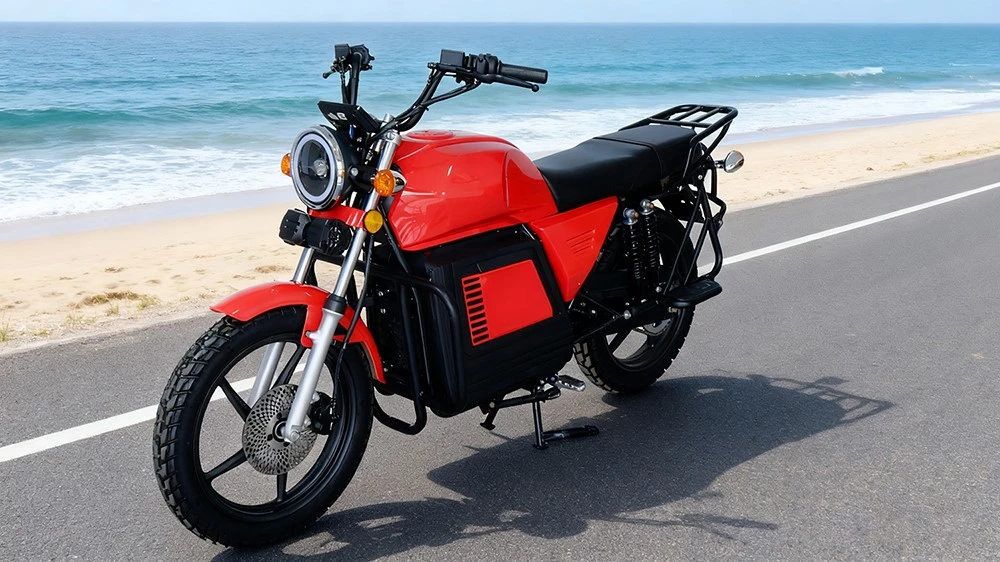
What Is a Mid-Drive Motor?
A mid-drive motor is mounted near the center of the motorcycle frame. Instead of driving the wheel directly, it transfers power through the drivetrain.
This design changes how power is delivered and can improve performance in demanding riding conditions.
Advantages of a Mid-Drive Motor
- Better weight distribution
- Strong climbing performance
- Higher torque efficiency on steep terrain
- Improved balance during aggressive riding
Mid-drive systems are commonly found on performance-oriented electric motorcycles and some off-road models.
Limitations
Compared with hub motors, mid-drive systems are generally more complex.
Potential considerations include:
- Higher manufacturing cost
- More drivetrain components
- Additional maintenance for chains or belts
- Increased mechanical complexity
These factors do not make mid-drive systems less reliable, but they usually require more maintenance than hub motors.
Hub Motor vs. Mid-Drive: Side-by-Side Comparison
| Feature | Hub Motor | Mid-Drive Motor |
|---|---|---|
| Installation | Inside wheel | Center of frame |
| Mechanical complexity | Lower | Higher |
| Routine maintenance | Lower | Higher |
| Hill climbing | Good | Better |
| Weight distribution | Standard | More balanced |
| Riding feel | Smooth and comfortable | More responsive |
| Typical applications | Urban commuting, delivery | Performance, hills, off-road |
Neither system is universally better. The right choice depends on how the motorcycle will be used.
Which Motor Is Better for Different Applications?
Urban Commuting
For everyday transportation, hub motors are often the preferred option.
Their simple construction, quiet operation, and lower maintenance requirements make them well suited for city riding.
Many urban electric motorcycles are designed around hub motor systems because they provide dependable performance for daily commuting.
You can explore different commuter-focused models on MiLG's Electric Motorcycle page
Food Delivery
Delivery fleets usually value reliability more than maximum performance.
Hub motors are commonly selected because they require fewer mechanical components and are easier to maintain across larger vehicle fleets.
Many commercial delivery vehicles also prioritize battery range, cargo capacity, and maintenance efficiency over aggressive acceleration.
Off-Road Riding
For riders regularly climbing steep hills or riding uneven terrain, mid-drive motors often provide better overall performance.
Because power is transferred through the drivetrain, mid-drive systems can make better use of available torque under demanding conditions.
Commercial Fleet Operations
Fleet operators often evaluate more than vehicle performance.
Other important considerations include:
- Maintenance cost
- Parts availability
- Vehicle downtime
- Technician training
- Long-term operating expenses
For many commercial applications, reducing maintenance complexity can be just as valuable as increasing performance.
Factors Buyers Should Consider
Choosing the right motor starts with understanding how the motorcycle will actually be used.
Terrain
Flat urban streets usually place different demands on a motorcycle than mountainous roads or rural environments.
Consider where the majority of riding will take place.
Maintenance Resources
Some businesses operate their own maintenance teams, while others depend on local repair shops.
Selecting a motor system that matches available service resources can reduce long-term operating costs.
Budget
Hub motor systems are commonly found on more cost-focused electric motorcycles, while mid-drive systems are often used on higher-performance models.
Rather than comparing purchase price alone, buyers should consider the total cost of ownership, including maintenance and replacement parts.
Target Customers
Different customer groups have different priorities.
For example:
- Daily commuters often value simplicity.
- Delivery businesses focus on reliability.
- Adventure riders may prioritize climbing performance.
- Fleet operators usually evaluate long-term operating efficiency.
How Manufacturers Choose Motor Systems
Manufacturers do not select motor systems randomly. The choice usually depends on the vehicle's intended application, target market, pricing strategy, and performance goals.
For example, a manufacturer producing city commuter vehicles may prioritize efficiency and ease of maintenance, while an off-road model may focus on torque and weight distribution.
According to its published product portfolio, MiLG offers several electric mobility categories designed for different applications, including:
Buyers comparing multiple vehicle categories can review these product lines before deciding which motor system best fits their market.
To learn more about the company and its manufacturing background.
Which Motor Is Right for Your Business?
There is no single answer for every buyer.
Importers should evaluate local market demand, service capability, and customer preferences before selecting vehicle platforms.
Dealers should consider which models are easiest to support with spare parts and maintenance.
Fleet operators may focus more on operating costs than maximum performance.
Individual riders should think about where they ride most often rather than choosing a motor based only on specifications.
The best motor is the one that matches your actual application.
Final Thoughts
The debate over hub motor vs. mid-drive does not have a universal winner.
Hub motors remain an excellent solution for urban commuting, delivery services, and businesses seeking lower maintenance. Mid-drive systems can provide advantages in climbing performance, balance, and demanding riding conditions.
Instead of asking which motor is "better," buyers should ask which motor best fits their customers, terrain, and long-term business goals.
When evaluating suppliers, compare not only the motor system but also the manufacturer's product range, technical documentation, and production capability. Companies such as MiLG offer multiple electric mobility categories, allowing buyers to compare different vehicle solutions based on their own market requirements.
Frequently Asked Questions
What is the main difference between a hub motor and a mid-drive motor?
A hub motor is built into the wheel and drives it directly, while a mid-drive motor is mounted near the center of the frame and transfers power through the drivetrain.
Is a hub motor more reliable?
Hub motors generally have fewer moving parts, which can reduce routine maintenance. However, overall reliability also depends on component quality and proper maintenance.
Which motor is better for delivery electric motorcycles?
Many delivery motorcycles use hub motors because they offer a simple design and lower maintenance requirements, making them practical for fleet operations.
Is a mid-drive motor better for climbing hills?
In many situations, yes. Mid-drive systems can make better use of drivetrain gearing, which often improves climbing performance on steep terrain.
Which motor should importers choose?
The best choice depends on the target market, road conditions, maintenance capability, customer demand, and the intended use of the vehicle.


