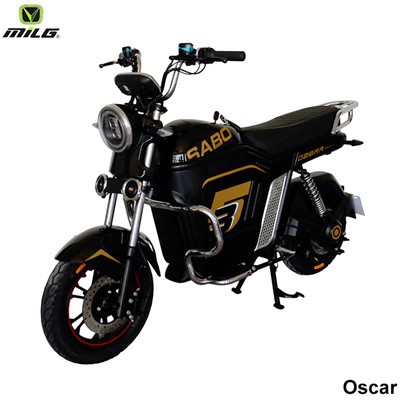
The charging time of a fat tire ebike battery is a critical factor for riders, influencing both the convenience of use and the overall efficiency of the bike. As a leading supplier of fat tire ebikes, we understand the significance of this aspect and are eager to share in - depth knowledge about it.
Understanding Fat Tire Ebike Batteries
Before delving into the charging time, it's essential to understand the batteries used in fat tire ebikes. These batteries are typically lithium - ion, which are favored for their high energy density, long lifespan, and relatively low self - discharge rate. The capacity of these batteries is measured in watt - hours (Wh), and the voltage can vary, commonly ranging from 36V to 48V.
The capacity of the battery significantly impacts the charging time. A higher capacity battery stores more energy and thus generally takes longer to charge. For instance, a 500Wh battery will take more time to charge compared to a 300Wh battery, assuming the same charging rate.
Factors Affecting Charging Time
Battery Capacity
As mentioned earlier, battery capacity is a primary determinant of charging time. A larger capacity battery, say a 750Wh battery, can power the fat tire ebike for a longer distance but will require more time to replenish its energy. In contrast, a smaller 300Wh battery will charge more quickly but may offer a shorter riding range.
Charger Output
The output of the charger is measured in amperes (A). A charger with a higher amperage can deliver more power to the battery, reducing the charging time. For example, a 2A charger will charge a battery faster than a 1A charger. However, it's important to note that the battery's charging circuit has a maximum input limit. Using a charger with an amperage higher than this limit can damage the battery and pose safety risks.
State of Charge
The initial state of charge of the battery also affects the charging time. If the battery is almost completely depleted, it will take longer to charge compared to when it is only partially discharged. Most chargers charge the battery rapidly until it reaches about 80% of its capacity, and then the charging speed slows down to protect the battery's health.
Battery Age and Health
Over time, the performance of a battery degrades. An older battery or one that has been subjected to improper charging or storage conditions may take longer to charge. This is because the internal resistance of the battery increases, reducing the efficiency of the charging process.
Calculating Charging Time
The basic formula to calculate the approximate charging time is: Charging Time (hours)=Battery Capacity (Wh)/Charger Output (W). For example, if you have a 48V, 10Ah battery (which has a capacity of 48V x 10Ah = 480Wh) and a 48V, 2A charger (with an output of 48V x 2A = 96W), the estimated charging time would be 480Wh/96W = 5 hours.
However, this is a simplified calculation. In reality, due to the factors mentioned above, such as the slow - down in charging speed near full capacity and the inefficiencies in the charging process, the actual charging time may be longer.

Typical Charging Times
Small Capacity Batteries (300 - 400Wh)
For small capacity batteries in fat tire ebikes, with a standard charger (e.g., a 1A charger), the charging time can range from 3 to 4 hours. If a higher - amperage charger (e.g., 2A) is used, the charging time can be reduced to around 1.5 to 2 hours.
Medium Capacity Batteries (400 - 600Wh)
Medium - capacity batteries usually take between 4 and 6 hours to charge with a standard 1A charger. With a 2A charger, the charging time can be cut down to 2 to 3 hours.
Large Capacity Batteries (600 - 750Wh)
Large capacity batteries, which are often found in high - performance fat tire ebikes, can take 6 to 8 hours to charge with a 1A charger. Using a 2A charger can reduce this time to 3 to 4 hours.
Tips to Reduce Charging Time
Use a Compatible High - Amperage Charger
As long as it is compatible with your battery, using a charger with a higher amperage can significantly reduce the charging time. However, always ensure that the charger's amperage does not exceed the battery's recommended input limit.
Charge in a Suitable Environment
The temperature of the charging environment can affect the charging process. Batteries charge most efficiently at room temperature. Extreme cold or hot temperatures can slow down the charging process and may even damage the battery over time.
Avoid Deep Discharges
Regularly discharging the battery to very low levels can increase its internal resistance and lead to longer charging times. Try to recharge the battery when it reaches about 20 - 30% of its capacity.
Impact of Charging Time on Riding Experience
The charging time of a fat tire ebike battery can have a profound impact on the riding experience. If the charging time is long, riders may find it inconvenient, especially if they need to use the bike frequently. For example, if you have a daily commute and your bike's battery takes 8 hours to charge, it may be challenging to keep the bike ready for use.
On the other hand, a shorter charging time allows for more flexibility. You can quickly top up the battery during a short break, such as during a lunch break at work, and continue your journey without significant delays.
Our Fat Tire Ebike Offerings
At our company, we offer a wide range of fat tire ebikes with different battery capacities to meet the diverse needs of our customers. Our Top Fat Tire Electric Bikes come with high - quality lithium - ion batteries that are designed for optimal performance and charging efficiency.
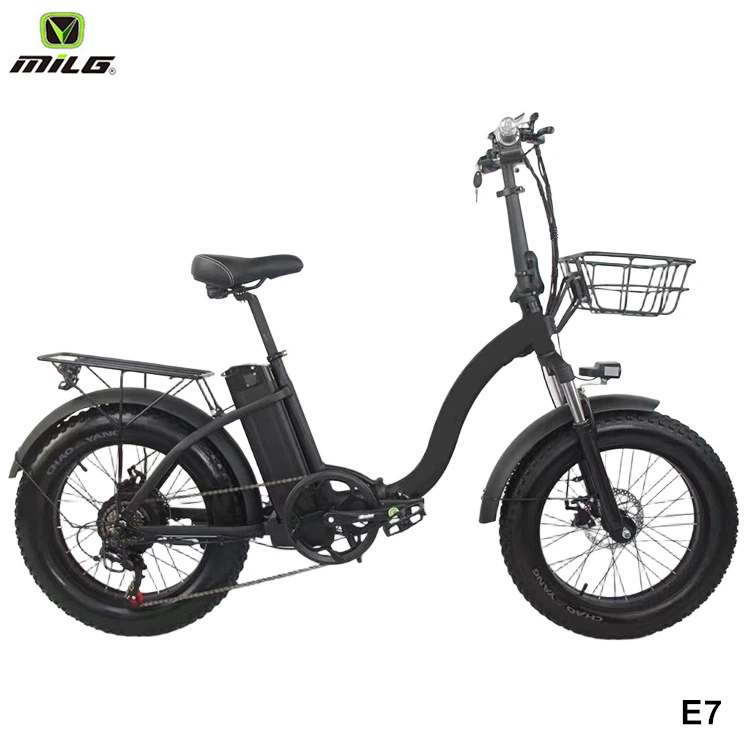
The Folding Fat Tire Electric Bike 750 Watt is a popular choice among our customers. It features a powerful 750 - watt motor and a large - capacity battery that can provide a long riding range. Despite its large capacity, with the right charger, the battery can be charged in a reasonable amount of time.
Another great option is the Electric 500w Folding Fat Tire Ebike. This bike is more suitable for riders who have shorter commutes or who prefer a more compact and portable option. Its battery has a moderate capacity, which means it can be charged relatively quickly.
Conclusion
The charging time of a fat tire ebike battery is influenced by multiple factors, including battery capacity, charger output, state of charge, and battery age. By understanding these factors, riders can make informed decisions about their charging habits and choose the right charger for their needs.
If you are interested in purchasing fat tire ebikes or have any questions about battery charging, we encourage you to reach out to us for further discussion. We are committed to providing high - quality products and excellent customer service. Whether you are a casual rider or a daily commuter, we have the perfect fat tire ebike for you.
References
- "Electric Bicycle Battery Technology" - Journal of Sustainable Transportation
- "Lithium - Ion Batteries: Principles and Applications" - Academic Press