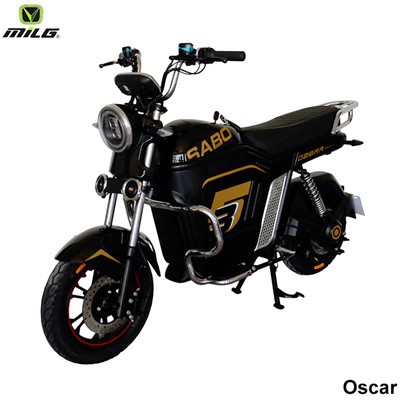
Do e - motorcycles require a special license?
As a supplier of e - motorcycles, I've encountered numerous inquiries from potential customers regarding the licensing requirements for these innovative vehicles. The question of whether e - motorcycles demand a special license is not a straightforward one, as it varies significantly based on multiple factors, including the vehicle's specifications and local regulations.
First and foremost, it's essential to understand the different categories of e - motorcycles. There are low - speed e - motorcycles, which typically have a maximum speed of around 20 - 30 mph. These are often classified as electric mopeds or scooters in many regions. In some areas, riders of low - speed e - motorcycles may not need a special motorcycle license. For instance, in certain states in the US, if an e - motorcycle meets the criteria of a low - speed electric vehicle (LSEV), such as having a top speed of no more than 25 mph and being powered by an electric motor of a specific wattage, riders may only need a regular driver's license. This is because these low - speed e - motorcycles are considered less powerful and less dangerous compared to their high - speed counterparts.
On the other hand, high - speed e - motorcycles, like the 60 Mph Electric Motorcycle, usually do require a special license. These e - motorcycles are designed to reach speeds comparable to traditional gasoline - powered motorcycles. They offer a thrilling riding experience but also come with increased risks. In most countries and states, a motorcycle license is mandatory for riding high - speed e - motorcycles. The process of obtaining a motorcycle license typically involves passing a written test on traffic laws related to motorcycles, a vision test, and a practical riding test. This is to ensure that riders have the necessary knowledge and skills to operate these powerful vehicles safely on the road.


Another important factor is the legal status of e - motorcycles in terms of highway use. Electric Motorcycle Highway Legal models are subject to stricter regulations. High - speed e - motorcycles that are allowed to be driven on highways need to meet certain safety and performance standards. These standards may include requirements for brakes, lights, mirrors, and emissions (although e - motorcycles are zero - emission vehicles). Since highway riding involves higher speeds and more complex traffic situations, riders are expected to have a higher level of proficiency. Therefore, a special motorcycle license is almost always required for operating highway - legal e - motorcycles.
The power and performance of e - motorcycles also play a crucial role in determining the licensing requirements. Fast Speed Electric Motorcycle models are built for speed and agility. They often have high - torque electric motors that can accelerate rapidly. These features make them more similar to high - performance gasoline motorcycles. As a result, the licensing requirements for fast - speed e - motorcycles are the same as those for traditional high - performance motorcycles. Riders need to demonstrate their ability to handle the power and speed of these vehicles through a proper licensing process.
In addition to the vehicle - related factors, local laws and regulations are the most decisive factor in determining the licensing requirements for e - motorcycles. Different countries, states, and even cities may have their own rules. For example, in some European countries, the classification of e - motorcycles is based on their power output. A lower - powered e - motorcycle may be classified as an electric bicycle or a moped, which may not require a full motorcycle license. However, in other regions, any vehicle with a motor, regardless of its power, may be considered a motorcycle and thus require a motorcycle license.
It's also worth noting that the licensing situation for e - motorcycles is evolving. As the popularity of e - motorcycles continues to grow, governments are constantly reviewing and updating their regulations. Some areas are looking into creating more specific licensing categories for e - motorcycles to better reflect their unique characteristics. This could potentially lead to more lenient or more strict licensing requirements in the future.
For potential buyers, it's extremely important to research the licensing requirements in their local area before purchasing an e - motorcycle. This can save them from legal issues and ensure a safe and enjoyable riding experience. As a supplier, I always advise my customers to check with their local Department of Motor Vehicles (DMV) or equivalent authority to get accurate information about licensing. I also provide information about the specifications of our e - motorcycles so that customers can better understand how they are classified under local laws.
In conclusion, whether e - motorcycles require a special license depends on a variety of factors, including the vehicle's speed, power, legal status for highway use, and local regulations. High - speed and highway - legal e - motorcycles generally require a special motorcycle license, while low - speed e - motorcycles may only need a regular driver's license in some areas. As an e - motorcycle supplier, I am committed to providing high - quality products and accurate information to our customers. If you are interested in purchasing an e - motorcycle and have questions about licensing or any other aspects, please feel free to contact us for further discussion. We are more than happy to help you find the perfect e - motorcycle that suits your needs and complies with local regulations.
References
- Local Department of Motor Vehicles (DMV) regulations in various regions.
- Industry reports on the development and classification of e - motorcycles.