

How to Operate an Electric Tricycle for Beginners: Basic Driving Tips
Learning how to operate an electric tricycle requires an understanding of its controls, acceleration, braking, and steering. Although a three-wheel vehicle provides a different riding experience from a two-wheel electric scooter, beginners still need to practice carefully before using it on public roads.
Whether you are learning to operate an electric passenger tricycle or an electric cargo tricycle, knowing how to start, stop, turn, and maintain the vehicle is essential.
This guide explains the basic operating procedures and safety practices that beginners should understand before riding an electric tricycle.
1. Get Familiar with the Electric Tricycle Controls
Before starting the vehicle, identify the main components and understand their functions.
Common electric tricycle controls include:
Handlebars: Used to control the direction of travel.
Throttle: Controls the motor's power output and vehicle acceleration.
Brake Levers or Pedal: Used to reduce speed and stop the vehicle, depending on the model.
Footrests: Provide a stable position for the rider's feet.
Power Switch: Turns the electrical system on or off.
Parking Brake: Helps keep the vehicle stationary when parked, if equipped.
Different electric tricycle models may have different control layouts. Read the manufacturer's operating instructions before using the vehicle.
2. How to Start and Stop an Electric Tricycle
Starting and stopping are the first basic operations beginners should learn.
Starting the Electric Tricycle
Follow these general steps:
Make sure the vehicle is stationary and the surrounding area is clear.
Sit in a comfortable and stable riding position.
Check that the parking brake is engaged while preparing the vehicle.
Turn on the power using the key switch or power button.
Confirm that the throttle and braking systems are functioning properly.
Release the parking brake according to the manufacturer's instructions.
Gently apply the throttle to move forward.
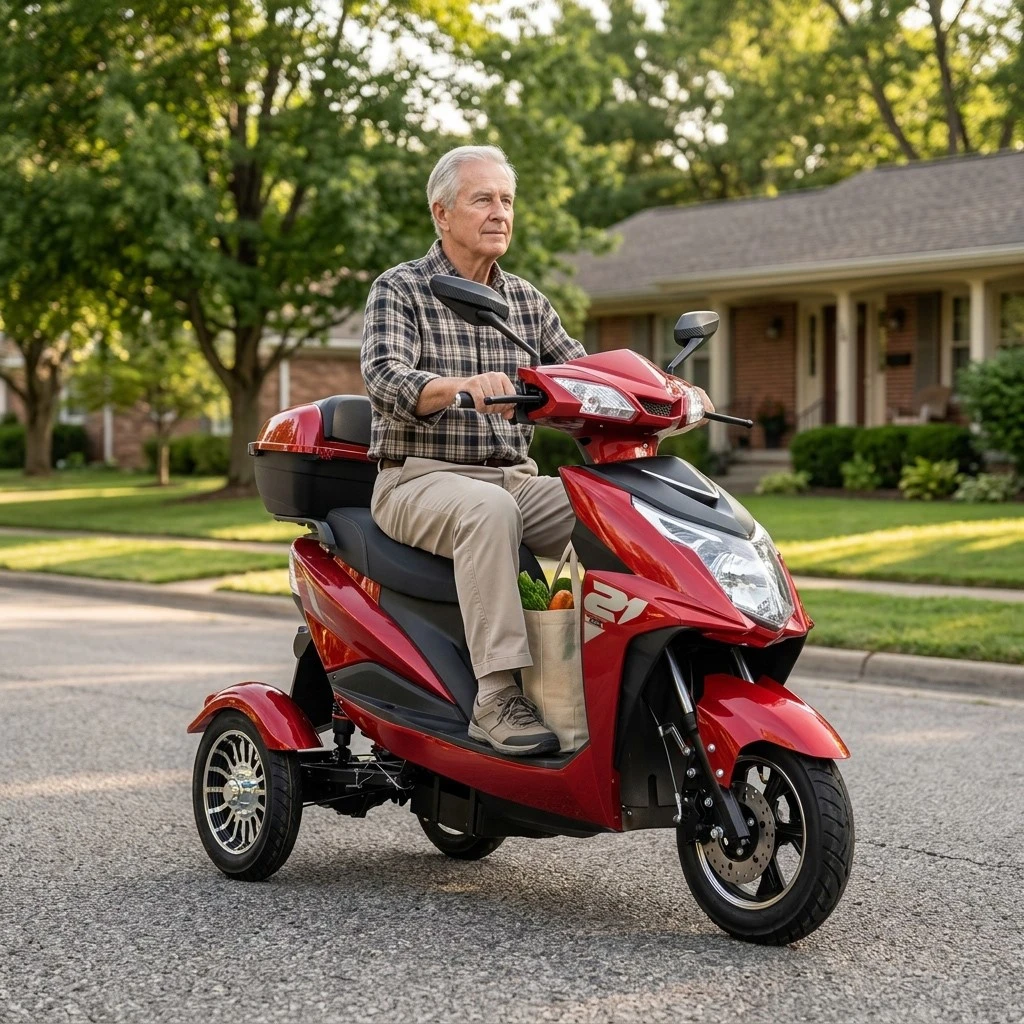
Avoid sudden acceleration. Start slowly and become familiar with how the vehicle responds to throttle movements.
Stopping the Electric Tricycle
When you need to stop, release the throttle and apply the brakes smoothly.
Reduce speed gradually and bring the vehicle to a complete stop in a safe position.
Once parked, engage the parking brake if equipped and switch off the vehicle according to the operating instructions.
Remember that footrests are designed to support your feet, not to control the vehicle's braking.
3. Learn How to Turn an Electric Tricycle
Turning requires careful speed management and smooth steering movements.
Before entering a turn:
Reduce speed.
Check the surrounding area.
Look toward the intended direction.
Turn the handlebars smoothly.
Avoid sudden acceleration or braking while turning.
Electric tricycles have different handling characteristics from two-wheel vehicles. Depending on their design, wheelbase, and load distribution, sharp turns at high speeds can affect stability and increase the risk of tipping.
Beginners should start with wide turns at low speeds in an open practice area.
For cargo electric tricycles, carrying additional weight can change the vehicle's handling. Practice without cargo first and follow the manufacturer's load recommendations.
4. Practice in a Safe Environment
After understanding the basic controls, beginners should practice in a flat, open area with little traffic.
Focus on the following operations:
Starting: Practice moving forward with gentle throttle input.
Straight-Line Driving: Maintain a steady direction and comfortable speed.
Braking: Practice slowing down and stopping smoothly.
Turning: Begin with wide turns and gradually improve steering control.
Parking: Practice stopping in a suitable position and securing the vehicle.
Avoid practicing in crowded areas, on steep slopes, or on slippery surfaces.
Spend enough time developing basic control before attempting more difficult riding conditions.
5. Electric Tricycle Safety Tips
Safe operation requires attention to the vehicle, road conditions, and other road users.
Follow Traffic Regulations
Traffic laws for electric tricycles vary between countries and regions.
Depending on the vehicle classification, requirements may include vehicle registration, a driving license, insurance, helmet use, and restrictions on public road access.
Check local regulations before using an electric tricycle on public roads.
Maintain a Suitable Speed
Beginners should maintain a low and controlled speed while learning.
Adjust your speed according to road conditions, visibility, traffic, and vehicle load.
Avoid sudden steering movements, particularly when carrying passengers or cargo.

Wear Protective Equipment
Wear a properly fitted helmet that meets the safety standards required in your market.
Suitable footwear and protective clothing can also help improve riding safety.
6. Regular Electric Tricycle Maintenance
Regular maintenance helps keep an electric tricycle in proper operating condition.
Pay particular attention to these components:
Battery
Check the battery condition and charging status. Use the recommended charging equipment and follow the manufacturer's charging instructions.
Tires
Inspect the tires for visible damage and check tire pressure according to the manufacturer's specifications.
Braking System
Check whether the brakes respond properly. If braking performance becomes weaker or unusual noises appear, arrange a professional inspection.
Electrical Components
Check visible wiring, connectors, lights, and other electrical components for damage or abnormal operation.
If you notice unusual performance or mechanical problems, stop using the vehicle until it has been inspected.
Frequently Asked Questions About Operating an Electric Tricycle
1. How do beginners start an electric tricycle?
First, make sure the vehicle is stationary and the surrounding area is clear. Turn on the power, check the controls, release the parking brake according to the manufacturer's instructions, and apply the throttle gradually.
2. How do you stop an electric tricycle?
Release the throttle and use the vehicle's braking system to reduce speed and stop. Engage the parking brake when parking if the vehicle is equipped with one.
3. How should beginners turn an electric tricycle?
Reduce speed before turning, check the surrounding area, and make smooth steering movements. Avoid sharp turns at high speeds.
4. Is an electric cargo tricycle operated differently from a passenger tricycle?
The basic controls may be similar, but cargo tricycles can have different dimensions, weight distributions, and load capacities. Riders should understand the specific vehicle's handling characteristics before carrying cargo.
5. How often should an electric tricycle be maintained?
Regularly inspect the battery, tires, brakes, and electrical components. Follow the manufacturer's recommended maintenance schedule and arrange professional servicing when necessary.
Conclusion
Learning how to operate an electric tricycle starts with understanding the vehicle's controls and mastering basic operations.
Beginners should focus on smooth starting, controlled braking, safe turning, and regular vehicle inspections. With gradual practice and attention to local traffic regulations, new riders can become more familiar with electric tricycle operation and develop safer driving habits.


