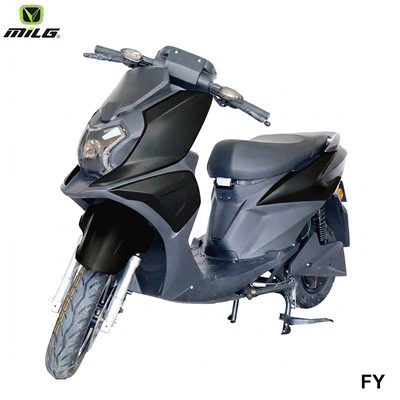
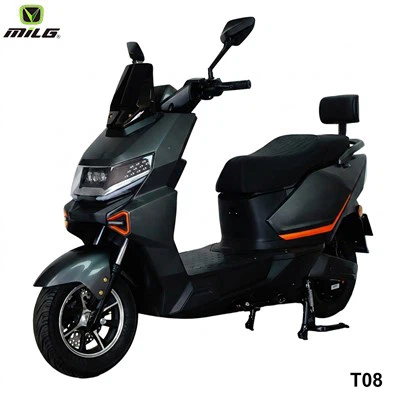
In motorcycle repair shops in Mexico City, I often observe a common phenomenon: many electric motorcycles are retired early due to battery issues. An experienced local mechanic told me that in their battery failure cases, over 60% of the problems are not caused by the battery itself but by mismatches between the battery and the vehicle system, improper charging habits, or environmental adaptation issues. This led me to ponder: For commercial buyers in Latin America, what does choosing the right electric motorcycle battery system truly mean?
The Battery: Not Just an Energy Source, but the Core of Operational Costs
For commercial operations, a battery is more than just a "fuel tank" that makes the vehicle move; it is a key factor determining the Total Cost of Ownership (TCO). According to statistics from electric vehicle operators in Latin America, battery costs account for approximately 35-45% of an electric motorcycle's total vehicle cost. Over the vehicle's lifecycle, battery replacement and maintenance can constitute 20-30% of total operating costs. This means battery choice directly impacts the return on investment period for a commercial venture.
Data from an 18-month study of delivery fleets using different battery systems in Bogotá, Colombia, showed that fleets using high-quality lithium-ion batteries had 22% lower energy cost per kilometer and 15 percentage points higher vehicle uptime compared to fleets using lower-quality batteries.
Comparing Mainstream Battery Technologies: Lead-Acid vs. Lithium for Latin American Adaptability
Lead-Acid Batteries remain a significant choice in the Latin American market, primarily due to their low initial investment. A standard 48V/20Ah lead-acid battery pack costs approximately $120-$180, while a lithium-ion battery pack of similar capacity ranges from $350-$500. However, the energy density of lead-acid batteries is only 30-50 Wh/kg, far lower than lithium-ion's 120-200 Wh/kg. This means to achieve the same range, a lead-acid battery can be 3-4 times heavier.
In practical operations, the cycle life of lead-acid batteries is typically 300-500 cycles (to 80% capacity), while lithium-ion batteries can achieve 1000-2000 cycles. In commercial scenarios requiring daily full charge-discharge cycles, lead-acid batteries may need replacement after 12-18 months, whereas lithium-ion batteries can last 3-5 years.
Lithium-ion Batteries are seeing rapidly growing adoption in Latin America, especially in countries like Brazil and Chile. Their main advantages include:
- Higher energy density, reducing vehicle weight by 40-60%
- Longer cycle life, reducing long-term replacement frequency
- More stable voltage output, ensuring consistent vehicle performance
- Faster charging speeds, with most supporting 80% charge in 2-3 hours
However, performance degradation of lithium-ion batteries in high-temperature environments requires special attention. Test data indicates that lithium-ion batteries operating long-term in environments above 35°C experience capacity fade 1.5-2 times faster than those at 25°C.
The Battery Management System (BMS): The Invisible Guardian
A quality battery system depends not only on cell quality but also on the design of the Battery Management System (BMS). The BMS is responsible for:
- Cell Balancing: Ensuring voltage differences between all cells in the pack do not exceed 0.05V, preventing individual cell overcharge or over-discharge.
- Temperature Monitoring: Reducing charging current or stopping charge when cell temperature exceeds 55-60°C.
- Charge/Discharge Protection: Preventing charging when the battery is below 0°C to avoid lithium dendrite formation.
- Communication Interface: Providing accurate State of Charge (SOC) and State of Health (SOH) data, typically with an error margin within ±5%.
For commercial fleets, battery systems with advanced BMS functionality can reduce unexpected failure rates by 30-40% and extend overall battery pack life by 15-25%.
Environmental Adaptability: Special Challenges in Latin America
Latin America's diverse climate poses specific demands on battery systems:
- High-Temperature, High-Humidity Regions (e.g., Amazon Basin, Central American coast): Battery systems require good thermal design and moisture protection. In environments with sustained relative humidity over 80%, corrosion rates on battery connectors can increase by 2-3 times.
- High-Altitude Regions (e.g., Andes Mountains): Air density decreases by about 10% per 1000 meters of altitude, affecting battery cooling efficiency. Above 3000 meters, battery systems may require additional cooling design or derated power usage.
- Dusty Environments (e.g., Peruvian coast, Northern Mexico): Dust accumulation can block battery cooling channels, raising operating temperatures by 5-10°C and accelerating battery aging. A dust protection rating of at least IP54 is recommended.
Charging Infrastructure and Operational Strategy
The effectiveness of a battery system depends not only on its own design but also on charging infrastructure and operational strategy:
- Charging Network Planning: In a pilot project in Santiago, Chile, delivery fleets charging centrally at depots were 25% more efficient and saw 18% longer battery life compared to drivers charging individually at home. Centralized charging facilitates implementing best practices like "shallow cycling" (keeping charge between 20-80%).
- Charger Compatibility: Using incompatible chargers is a leading cause of battery damage. The charger's output voltage should match the battery's rated voltage within ±1%, and the maximum charging current should not exceed 120% of the manufacturer's recommendation.
- Battery Swapping Models: In major cities like São Paulo, Brazil, battery swapping is gaining popularity. Professionally operated swapping networks ensure batteries are always in good condition, reducing fleet-owned battery aging risks. Data shows fleets using swapping models have 12-18% higher vehicle uptime than those relying on owned charging.

Maintenance and Safety Practices
- Routine Inspection: Visually inspect the battery weekly for swelling, leaks, or loose connections. The battery pack surface temperature should not exceed ambient temperature by more than 15°C.
- Storage Recommendations: For long-term storage, lithium-ion batteries should be kept at 40-60% charge in a dry, temperature-stable environment (ideally 15-25°C).
- Safe Handling: Damaged lithium-ion batteries must be disposed of professionally, not discarded arbitrarily. In Chile, professional battery recyclers can recover 85% of battery materials.
- Fire Risk Mitigation: Although lithium-ion battery fire risk is very low (estimated failure rate between 1 in 100,000 to 1 in 1,000,000), preventive measures are necessary, including using flame-retardant materials, installing thermal runaway detection systems, and avoiding mechanical damage.
Procurement Decision Guide: Balancing Performance, Cost, and Reliability
Faced with diverse battery options, commercial buyers in Latin America can refer to this decision-making framework:
- Needs Analysis: Define daily mileage, load requirements, charging time, and infrastructure conditions. For example, if daily mileage is below 50 km with stable charging access, lead-acid may be economical; if over 80 km or requiring fast turnaround, lithium-ion is more suitable.
- Total Cost of Ownership Calculation: Consider battery purchase, replacement, charging, and maintenance costs over 3-5 years. A study in Brazil found that while lithium-ion initial investment was 40% higher, the three-year total cost was 22% lower.
- Supplier Evaluation: Check if the supplier offers local support, warranty terms (typically 1-3 years), and technical documentation. In Mexico, suppliers with local support networks have an average response time 48 hours faster.
- Sample Testing: Before large-scale procurement, test a small batch of batteries in actual operating conditions for at least 2-3 months, covering different seasonal conditions.
- Standardization Consideration: Choose battery systems compliant with international standards (e.g., UN38.3, UL, or IEC), which ensure a baseline of safety and performance.
The electric motorcycle battery system is the foundation of successful commercial operations. In a diverse and opportunity-rich market like Latin America, a wise battery choice can reduce costs, improve reliability, and contribute to the sustainable transportation transition.
MILG specialize in providing thoroughly validated electric mobility solutions for global commercial partners. For commercial buyers in Latin America, we understand your comprehensive consideration of local adaptability, long-term reliability, and total cost of ownership. Our professional team can provide data-driven battery system selection advice and customized configuration solutions based on your specific operational scenario-whether urban delivery, tourism rental, or shared mobility.
If you are seeking reliable electric motorcycle battery solutions for your fleet operations or wish to learn more about the performance of different battery technologies in specific Latin American environments, please contact us through our official channels for professional consultation. We look forward to discussing how optimized energy solutions can enhance your operational efficiency and sustainability performance.